







 Margrét Anna
 Sölvi Rúnar
 Ólafur Páll
 Helgi
 Hanna Birna
 Sigurður Ingibergur
 Helgi Hrafn

Why use Parasend? Comparing it to mail, email and unverified tools
Most sensitive documents still go out one of three ways: a stamp and an envelope, a plain email, or a link through some file-sharing or e-signature tool that logs when it was opened. All three feel like they get the job done - right up until someone on the other end says "I never got it," and you find out what your proof was actually worth.
Here's what each option actually proves, what it doesn't, and where a registered eDelivery service like Parasend changes the picture.
The question that matters: what can you actually prove?
Not "did I send it" - almost anything can show that. The question that decides a dispute is narrower: can you show, after the fact, who specifically received it, that the content they received was unaltered, and exactly when each of those things happened? That's what a delivery method is really being judged on, whether the dispute is a customer claiming non-receipt, a court asking for proof of service, or a regulator asking how you notified someone.
| What you need to prove | Plain email | Unverified link / e-signature tool | Physical registered mail | Parasend |
|---|---|---|---|---|
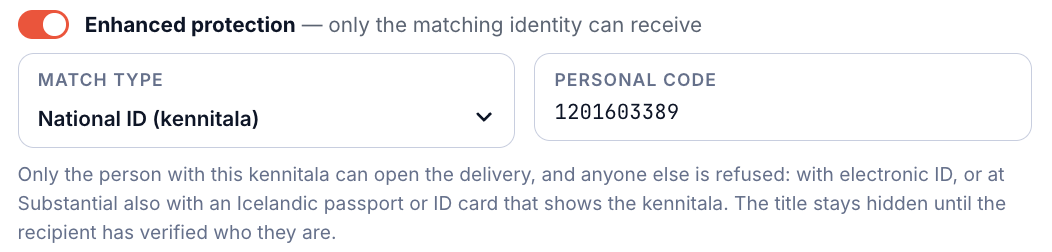
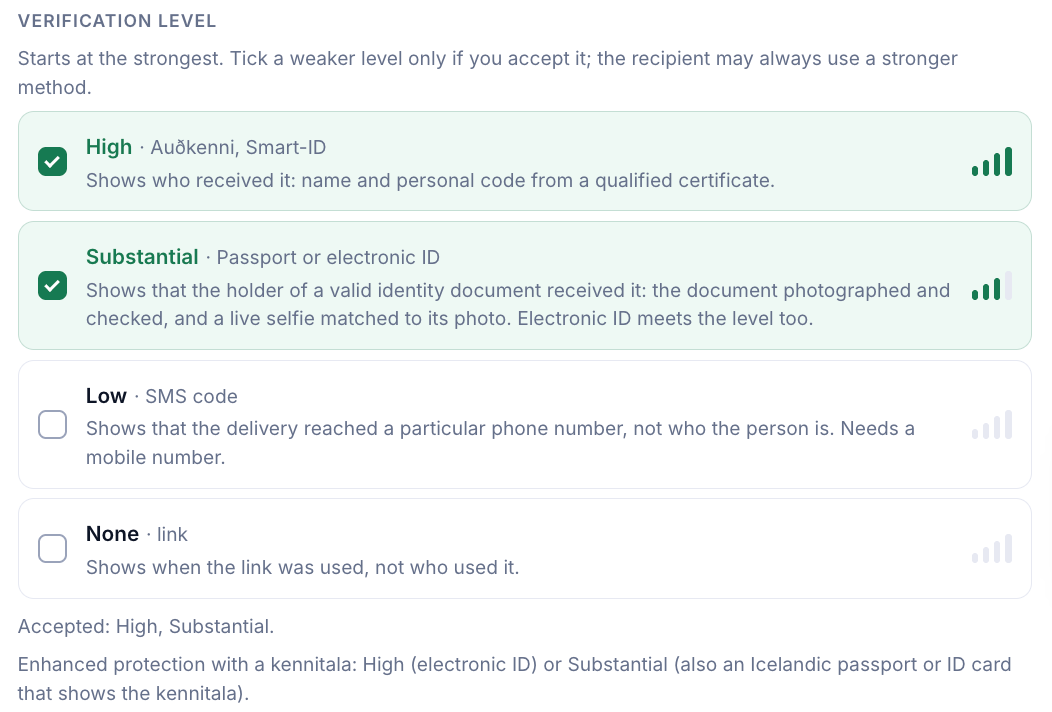
| Who specifically received it | Not verified - anyone with inbox access | Usually not verified - a click, not a person | Whoever signed at the counter or door | eID-verified individual (passport coming soon), assurance level recorded |
| Content wasn't altered | No integrity seal | Rarely sealed against tampering | Physical document in hand | Cryptographic hash, sealed with an electronic seal |
| Exactly when it happened | Client-side timestamp, easily disputed | Server log timestamp, not independently sealed | Postmark and signature date | Time of every event, sealed into the record |
| Legal recognition as evidence | None - ordinary evidence, no special status | None, unless built as a registered delivery service | Established under postal law | Yes - eIDAS Article 43, EU/EEA-wide |
| Time to deliver | Seconds - but see below | Seconds | 2-5 days in transit | ~2 min, notification to verified receipt |
Registered-mail timing is a typical range for Iceland; Parasend timing is a product design target. Both illustrative, not measured service statistics.
Plain email: fast, but proves almost nothing
Email is quick precisely because it skips every step that would make it strong evidence. There's no identity check - "delivered to an inbox" isn't the same as "received by a specific person," since anyone with access to that inbox, a forwarding rule, or a shared account can be the one who actually opens it. There's no integrity seal, so nothing stops - or even reliably detects - a message or attachment changing between send and open. Read receipts are the closest thing email has to proof, and they're entirely opt-in on the recipient's end: a read receipt only exists if the recipient's client sends one, which most people can turn off, and a missing receipt proves nothing either way. None of it carries any special evidentiary status - email is not a registered electronic delivery service, so it gets none of the recognition eIDAS Article 43 gives registered delivery. It's ordinary evidence, weighed like any other.
Unverified links, file-transfer and e-signature tools: better logging, same gap
A step up from email: many file-sharing and e-signature tools log an "opened at [timestamp]" event, sometimes with an IP address. That's genuinely useful - it's more than email gives you. But it usually proves a link was clicked from some device, not which person clicked it. Unless the tool binds that click to a verified identity - an actual eID or passport check, with the assurance level recorded - "opened" and "received by the right person" are two different claims, and only the second one is worth much when it's contested. Most of these tools aren't built as electronic registered delivery services either, so the same Article 43 gap applies: whatever they log is ordinary evidence, not registered delivery evidence.
Physical registered mail: strong tradition, thin resolution
A traditional ábyrgðarbréf (registered letter) is real evidence, and it's held up in Icelandic practice for decades - that's exactly why Parasend is built to sit on the same statutory footing, not replace it with something weaker. But its resolution is coarse: proof is typically a signature at the counter or a note that someone at the address accepted it, which rarely establishes that the specific intended recipient personally read the contents. It's also slow by construction - a letter takes 2-5 days to arrive and then waits for pickup, and the return receipt that proves delivery can take days to weeks to make its way back to you as a physical slip you then have to file and keep.
Where Parasend closes the gap
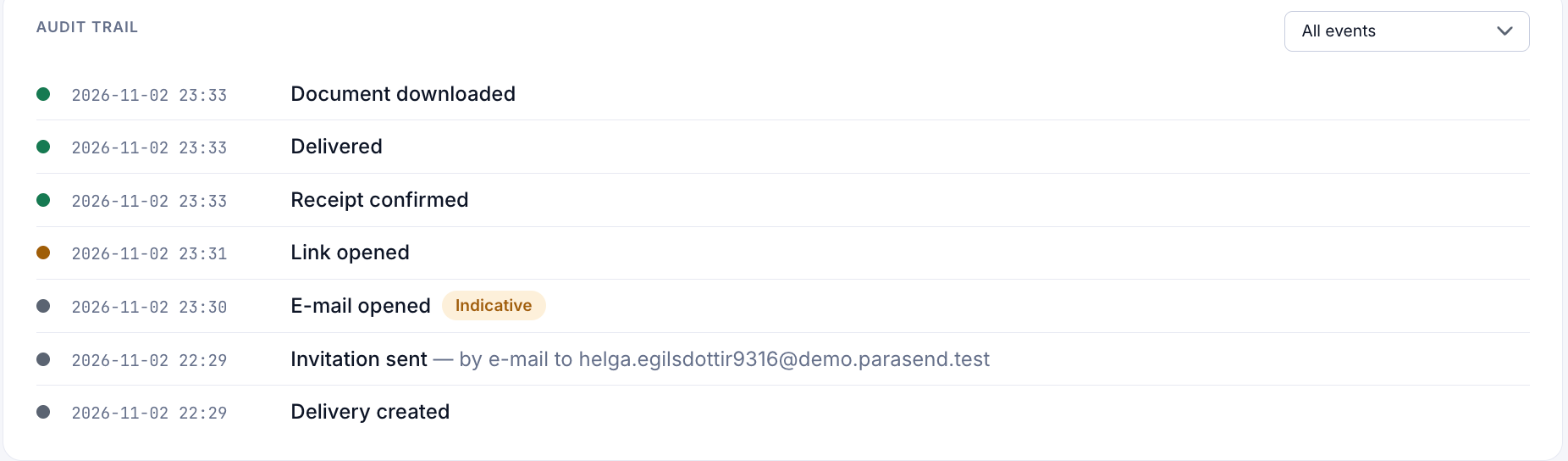
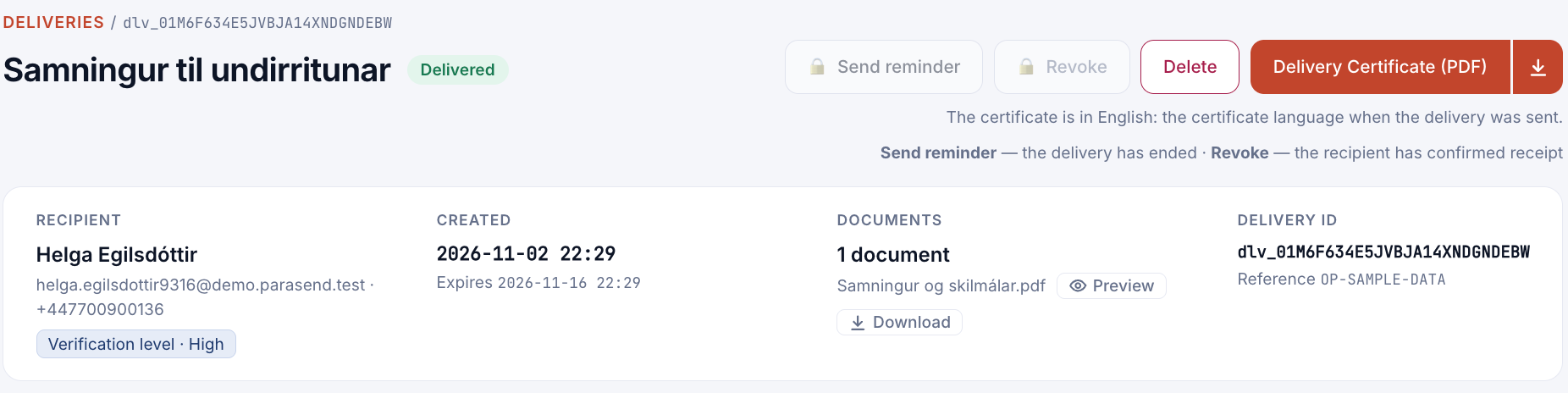
Every Parasend delivery is built to answer all four questions at once, following the ETSI EN 319 522 evidence standard: verified identity via eID (passport coming soon), with the assurance level actually used recorded in the evidence; a cryptographic hash of the exact document sealed with an electronic seal; the time of every step, sealed into the record; and the eIDAS Article 43 recognition that only a registered electronic delivery service gets. The result is a sealed evidence record plus a human-readable PDF, generated automatically, ready to hand over as-is - not assembled after the fact from server logs and hope.
When email or a courier is still the right call
None of this means email is wrong for everything - it isn't. For internal notes, marketing, routine back-and-forth, or anything genuinely low-stakes where nobody's going to dispute receipt, plain email is fine, and registered delivery would be overkill. The decision point is simple: if someone claiming "I never got it" would actually cost you something - a payment, a legal deadline, a compliance obligation, a dispute - that's the document that needs proof stronger than an inbox can give it.
See what a Parasend evidence pack actually contains.